
What does it really mean ? Food Safety
When it comes to food handling, not all “food-safe” claims are created equal.
While many products display food contact symbols or make food-safe claims, the standards behind these claims can vary. Understanding the testing and compliance requirements that sit behind food-safe certification is essential for businesses looking to maintain high standards of food safety and regulatory compliance.
| What is EN1186? |
| EN1186 is the recognised standard used to assess whether materials and products intended for food contact can be used safely. To comply with EN1186, manufacturers must first ensure that only substances permitted under EU Regulation 10/2011 are used within the product’s formulation. They must then carry out migration testing to demonstrate that substances from the glove will not transfer into food above accepted safety limits. The testing process is comprehensive because different food types can interact with materials in different ways. As a result, EN1186 evaluates products against a range of food simulants that represent:Aqueous foods Alcoholic foods Acidic foods Fatty foods Only products that successfully meet these requirements can be considered suitable for food contact applications. |
Why EN1186 Matters
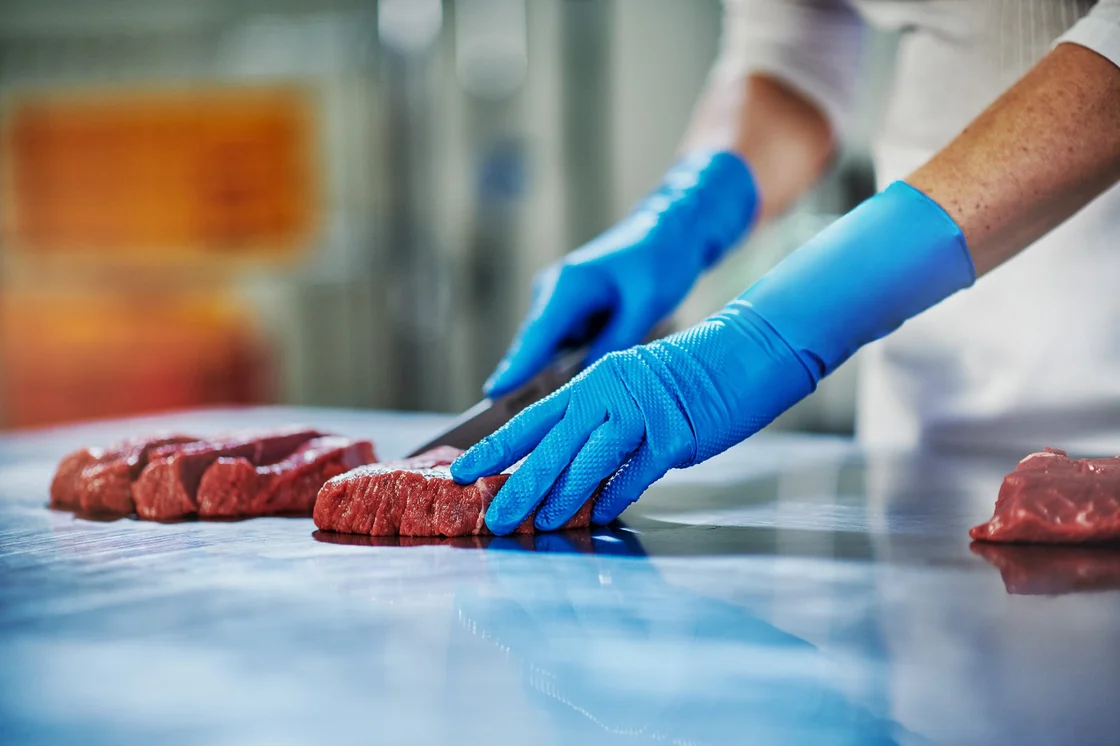
Food handling environments require PPE that not only protects the wearer but also helps protect the products being handled.
EN1186 certification provides assurance that gloves have been tested for food contact safety and that any potential transfer of substances from the glove to food remains within accepted limits. This helps businesses reduce risk, support compliance requirements, and maintain confidence throughout their food production, preparation, and handling processes.
Understanding what sits behind a food-safe claim allows businesses to make more informed purchasing decisions and select products that have been independently assessed for their intended use.